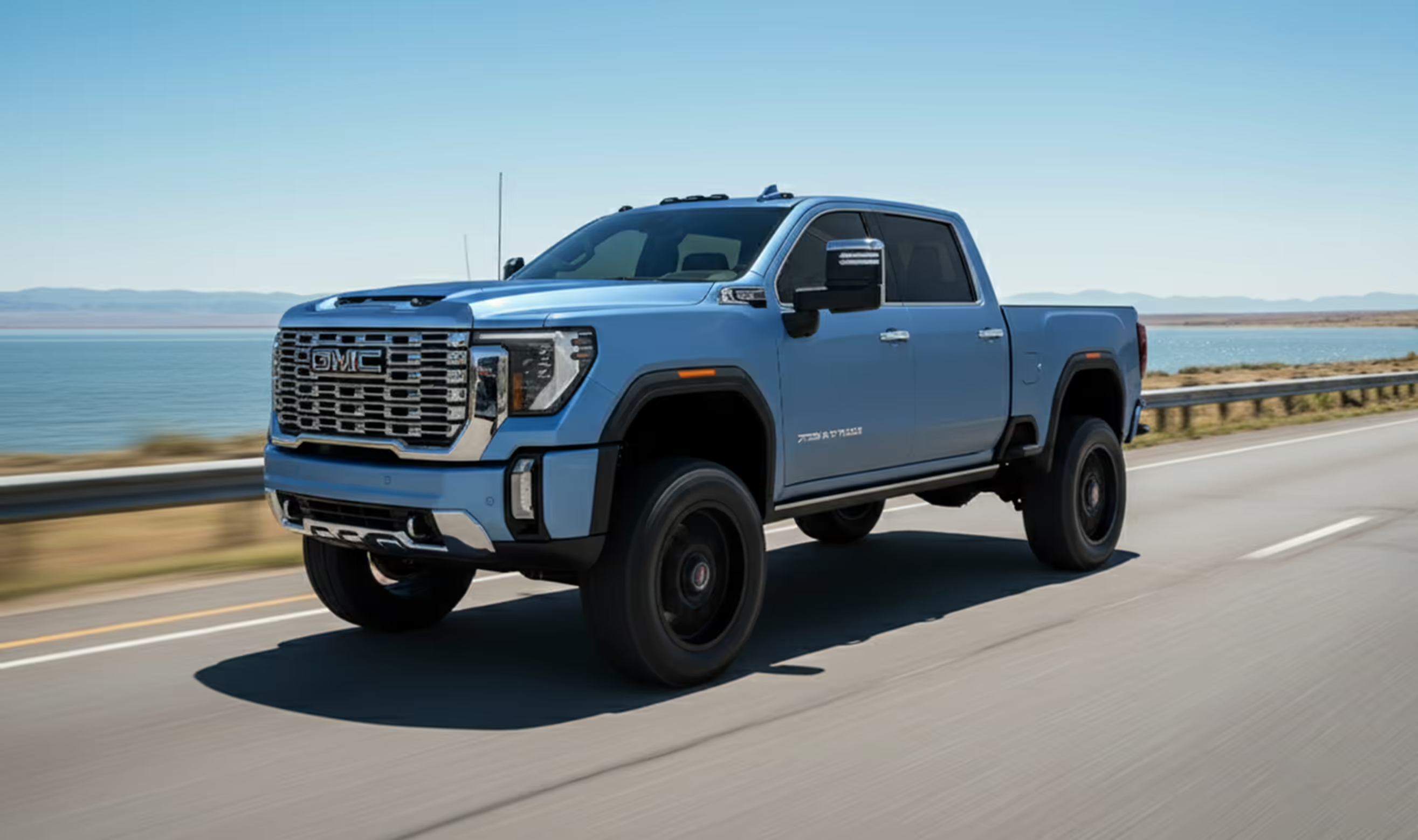
Precut Window Tint vs Professional Installation


Precut Window Tint vs Professional Installation
Precut window tint kits can look like an easy way to save money.
You find your vehicle online, order a window tint kit, and receive film already cut to fit the windows. At first, it sounds simple. You avoid measuring, cutting, and paying a shop for professional window tinting.
But window tint installation is more than cutting film to the right shape.
The glass must be cleaned properly. The film must be positioned correctly. Curved windows may need heat shaping. Dust, hair, and debris must be controlled. Edges must be finished cleanly. Moisture must be removed without creasing or scratching the film.
A precut window tint kit can reduce one part of the job, but it does not replace professional experience.
C4 Wraps provides professional window tinting in McKinney, TX, for cars, trucks, SUVs, vans, and commercial vehicles. Our team helps customers choose quality window tint film and installs it carefully for a clean, finished result.
Call C4 Wraps at 469-458-2700 to request a quote or schedule professional window tint installation.
What Is Precut Window Tint?
Precut window tint is window tinting film that has been cut in advance to match a specific vehicle's windows.
Instead of buying a full window tint roll and cutting each piece yourself, a precut kit may come with pieces shaped for:
- Front side windows
- Rear side windows
- Rear windshield
- Quarter windows
- Windshield visor strip
- Sunroof or panoramic roof, depending on the kit
A precut window tint kit may be sold as a do-it-yourself option for vehicle owners who want to install film at home.
The major selling point is that the film is already shaped. However, the installer still needs to clean, align, apply, squeegee, and finish the film correctly.
Pre Cut Window Tint vs Tint Rolls
There are two common ways DIY buyers purchase automotive tint film: precut kits and tint rolls.
Precut Window Tint Kits
Precut window tint kits are already shaped for a specific vehicle.
Potential benefits include:
- Less measuring
- Less trimming
- Vehicle-specific shapes
- Lower upfront cost than professional installation
- Convenient online ordering
Potential drawbacks include:
- Fit may not be perfect
- Installation is still difficult
- Contamination can still happen
- Curved glass may still require shaping
- Mistakes can ruin the film
- Warranty may be limited
- Results depend on the installer's skill
Window Tint Rolls
Window tint rolls are bulk film sold by length and width.
A window tint roll, tint roll, or ceramic tint roll must be measured, cut, shaped, and installed for each piece of glass.
Potential benefits include:
- More flexibility
- Ability to cut custom shapes
- Useful for experienced installers
- Available in different film types and shades
Potential drawbacks include:
- Requires measuring and cutting
- More opportunity for mistakes
- More wasted film
- Requires tools and skill
- Harder for beginners
- Curved glass can be challenging
A tint roll may be useful for a trained installer, but it is usually not the easiest option for someone doing their first vehicle.
What Comes in a Window Tint Kit?
A window tint kit or window tinting kit may include several items.
Depending on the product, it may come with:
- Precut window tint film
- Application solution
- Squeegee
- Knife or trimming tool
- Cleaning cloth
- Scraper
- Installation instructions
- Heat-shrinking guidance
Some kits include only the film. Others include basic tools.
Even with tools included, the quality of the final result depends heavily on preparation and installation.
Why Precut Film Still Requires Skill
Precut film solves only one part of the process: cutting the rough shape.
The installer still has to handle the most sensitive parts of the job.
Professional-looking window tint requires:
- Clean glass
- Clean window seals
- Dust control
- Proper film handling
- Correct wetting solution
- Careful positioning
- Proper squeegee technique
- Edge finishing
- Heat shaping when necessary
- Patience while the film cures
A precut piece can still end up with bubbles, wrinkles, gaps, creases, or trapped debris if installed incorrectly.
Common Problems With DIY Precut Window Tint
Precut window tint kits can work for some people, especially those with patience, tools, and experience. However, many first-time installers run into common problems.
Dust and Debris Under the Film
Even a tiny piece of dust or hair can be visible beneath the tint.
Once trapped under the film, contamination is difficult to remove without lifting and reinstalling the piece.
Misalignment
A precut piece still has to be aligned perfectly.
If it is placed too high, too low, or too far to one side, the finished window may show gaps or uneven coverage.
Wrinkles and Creases
Window tint film can crease when handled incorrectly.
Once creased, the damage may remain visible.
Bubbles
Bubbles can form when air, moisture, or contamination gets trapped under the film.
Some small moisture pockets may dry during curing, but larger bubbles or contamination-related bubbles may remain.
Peeling Edges
Edges may peel if the glass is not cleaned properly, the film is not positioned correctly, or moisture is not removed from the edge.
Difficulty With Rear Windows
Rear windows are often curved and can be difficult to tint.
They may require heat shaping so the film conforms to the glass. This is one of the hardest parts of DIY window tinting.
Damaged Defroster Lines
Rear glass often contains defroster lines.
Improper scraping, removal, or installation can damage them.
Poor Visibility
Low-quality film or poor installation can create haze, distortion, or uneven viewing through the glass.
What Is Professional Window Tinting?
Professional window tinting is the process of having trained installers apply automotive window film in a controlled shop environment.
Professional installation usually includes:
- Vehicle inspection
- Film consultation
- Glass cleaning
- Old tint removal when needed
- Film cutting or plotting
- Heat shaping
- Careful installation
- Edge finishing
- Final inspection
- Aftercare instructions
Professional tinting is not just about the film. It is about the process.
A high-quality film installed poorly will not look or perform like it should.
What Makes Professional Window Tint Different?
Professional window tinting offers several advantages over a do-it-yourself kit.
Better Preparation
The glass must be thoroughly cleaned before installation.
Professional installers understand how to clean glass, seals, edges, and surrounding areas to reduce contamination.
Better Tools
Professional tint shops use specialized tools for cutting, shaping, cleaning, applying, and finishing film.
These tools can make a major difference in the finished result.
Better Environment
A professional shop provides a cleaner and more controlled workspace than a driveway, parking lot, or open garage.
This helps reduce dust, wind, bugs, pollen, and debris.
Experience With Different Vehicles
Different vehicles have different glass shapes, seals, trims, and challenges.
An experienced installer has worked through many of these problems before.
Cleaner Edges
Professional installers know how to finish edges so the film looks clean and consistent.
More Predictable Results
A customer can expect a more professional appearance from an experienced shop than from a first-time DIY installation.
Window Tint Plotter and Cutting Machine
Some professional shops use a window tint plotter or window tint cutting machine to cut film.
A plotter uses digital patterns to cut film more precisely for specific vehicles.
A window tint cutting machine may help with:
- Consistent patterns
- Reduced hand-cutting
- Cleaner shapes
- Faster preparation
- Less film waste
- Better repeatability
However, a plotter does not install the tint.
Even machine-cut film still requires professional cleaning, positioning, squeegeeing, shaping, and finishing.
This is similar to precut kits. Accurate cutting helps, but installation skill still matters.
Tint Meter and Window Tint Meter
A tint meter measures how much visible light passes through a window.
This is often called visible light transmission, or VLT.
A window tint meter may be used to check the final darkness of the glass after film is installed.
This matters because factory glass may already have some tint. When film is added, the final window may be darker than the film percentage alone.
For example, a 35% film installed on factory glass may not result in a final 35% reading.
Professional installers understand how film and factory glass work together.
Window Tint School and Installer Training
Window tint school is where people learn the technical skills needed to tint vehicles professionally.
Training may cover:
- Film handling
- Glass preparation
- Heat shrinking
- Squeegee technique
- Cutting methods
- Plotter use
- Rear-window installation
- Defroster-line protection
- Tint removal
- Customer communication
- Film selection
The fact that window tint schools exist shows that tinting is a skilled trade. It is not just sticking film onto glass.
A good installer develops technique through training, repetition, and experience.
Spray-On Window Tint
Spray-on window tint is sometimes marketed as an alternative to film.
It may be used for certain specialty applications, but it is not usually the preferred option for professional automotive window tinting.
Potential concerns include:
- Uneven finish
- Limited clarity
- Difficult removal
- Overspray
- Inconsistent darkness
- Durability concerns
- Appearance issues
For most vehicles, professionally installed automotive window tint film is a more predictable choice.
Removable Window Tint
Removable window tint is designed to be easier to remove than standard adhesive film.
It may appeal to customers who want:
- Temporary privacy
- Seasonal tint
- A nonpermanent option
- Easier removal
Potential drawbacks include:
- Less durability
- Less clarity
- More visible edges
- Lower heat rejection
- Higher chance of lifting or movement
- A less finished appearance
Removable tint may work for short-term use but is usually not the best option for a permanent, high-quality result.
Static Cling Window Tint
Static cling window tint attaches to the glass without traditional adhesive.
It may be easy to install and remove, but it often has limitations.
Potential benefits include:
- Temporary use
- Easy removal
- Lower cost
- No permanent adhesive
Potential drawbacks include:
- Poorer fit
- Visible edges
- Bubbles
- Wrinkles
- Movement
- Lower durability
- Less professional appearance
Static cling film is not the same as professional automotive window film installed by a tint shop.
Precut Ceramic Tint Rolls and Kits
Some buyers look for ceramic tint rolls or precut ceramic window tint kits because they want the performance of ceramic film at a lower price.
Ceramic tint can offer:
- Strong heat rejection
- UV protection
- Reduced glare
- Good clarity
- Nonmetallic construction
- Better comfort in hot climates
However, ceramic film still requires proper installation.
A high-quality ceramic tint roll can still look bad if it is:
- Creased
- Contaminated
- Misaligned
- Poorly shaped
- Installed with dirty glass
- Finished with uneven edges
The film quality matters, but the installation quality matters too.
Precut Window Tint vs Professional Installation: Cost
Precut window tint kits usually cost less upfront than professional installation.
However, the total cost may change if mistakes happen.
DIY costs may include:
- Precut tint kit
- Tools
- Application solution
- Cleaning supplies
- Heat gun
- Replacement pieces if damaged
- Extra film if mistakes happen
- Professional removal if the job fails
- Professional reinstallation later
Professional installation costs more upfront because it includes film, labor, tools, experience, workspace, and quality control.
The cheapest upfront option is not always the cheapest total option.
Precut Window Tint vs Professional Installation: Quality
Precut film quality depends on the product. Installation quality depends on the person applying it.
Professional tint quality depends on both the film and the installer.
A professional shop can usually provide:
- Cleaner glass preparation
- Better edge finishing
- Better handling of curved glass
- Less visible contamination
- More consistent appearance
- Better support if questions arise
For many vehicle owners, professional window tinting provides a cleaner, longer-lasting, and more predictable result.
Precut Window Tint vs Professional Installation: Time
DIY installation may take longer than expected.
A first-time installer may spend hours:
- Cleaning the glass
- Reading instructions
- Separating liner from film
- Repositioning pieces
- Fixing bubbles
- Replacing damaged film
- Struggling with rear glass
Professional installers perform these tasks regularly and can usually complete the work more efficiently.
Precut Window Tint vs Professional Installation: Risk
DIY tinting carries more risk.
Potential risks include:
- Damaging the film
- Scratching glass
- Damaging defroster lines
- Trapping debris
- Creating a poor appearance
- Reducing visibility
- Needing professional removal
Professional installation reduces those risks because the work is handled by trained installers.
When a Precut Window Tint Kit Might Make Sense
A precut kit may be reasonable when:
- The vehicle owner has tinting experience.
- The vehicle has simple flat glass.
- The customer accepts the risk of imperfect results.
- The goal is temporary improvement.
- Budget is the main priority.
- Replacement pieces are available.
- The installer has the right tools and workspace.
For a first-time installer with no tools, no clean workspace, and no experience, a kit can become frustrating quickly.
When Professional Tint Installation Is the Better Choice
Professional installation is usually the better choice when:
- You want a clean finished result.
- You have a newer or higher-value vehicle.
- The rear glass is curved.
- Old tint must be removed.
- You want ceramic film.
- You want long-term durability.
- You care about visibility and appearance.
- You do not want to risk wasting film.
- You want help choosing the right shade.
For many drivers, the peace of mind is worth the additional cost.
How to Choose a Tint Shop Near You
When searching for "tint shop near me," "window tint shop near me," or "best tint shop near me," look beyond price.
A good tint shop should offer:
- Clear communication
- Quality window tint film
- Professional installation
- Transparent pricing
- Clean work environment
- Film options
- Tint shade guidance
- Old-tint removal
- Aftercare instructions
- Customer service
The nearest or cheapest shop is not always the best option.
What to Ask Before Booking Window Tint Installation
Before scheduling, ask:
- What film options do you offer?
- Do you install ceramic tint?
- Which windows are included in the quote?
- Is old tint removal included?
- Can you tint the windshield or sunroof?
- How long will installation take?
- What tint percentages are available?
- What warranty is included?
- How long should I wait before rolling down the windows?
- How should I clean the tint afterward?
A professional shop should answer clearly.
Why Choose C4 Wraps for Window Tinting?
C4 Wraps provides professional window tinting from its McKinney, TX, shop.
The team focuses on:
- High-quality workmanship
- Professional installation
- Premium materials
- Clear communication
- Honest recommendations
- Transparent service
- Customer satisfaction
C4 Wraps also provides:
- Commercial vehicle wraps
- Color-change wraps
- Paint protection film
- Boat wraps
- Architectural wraps and graphics
The shop is located at:
C4 Wraps
8176 FM 2478, Building 8650, Suite F
McKinney, TX 75071
Call 469-458-2700 to request a window tint quote or schedule an appointment.
Schedule Professional Window Tinting in McKinney
Precut tint kits and tint rolls may look simple online, but the final result depends on preparation, tools, environment, and installer experience.
C4 Wraps can help you compare:
- Standard window tint film
- Ceramic tint
- Different tint percentages
- Full-vehicle tint
- Two-window packages
- Old-tint removal
- Windshield tint
- Professional installation options
Call 469-458-2700 to discuss your vehicle and schedule professional window tint installation.
Conclusion
Precut window tint can reduce some of the cutting work, but it does not make window tint installation easy.
The film still has to be cleaned, positioned, shaped, applied, squeegeed, finished, and cured correctly. A window tint kit can save money upfront, but mistakes can lead to bubbles, creases, dust, peeling edges, poor visibility, wasted film, and professional removal later.
Professional window tinting costs more upfront because it includes the installer's experience, tools, process, workspace, and attention to detail.
For many drivers, professional installation is the better choice because it delivers a cleaner and more predictable result.
C4 Wraps provides professional window tinting in McKinney, TX, for cars, trucks, SUVs, vans, and commercial vehicles.
Call C4 Wraps at 469-458-2700 to request a quote and schedule your window tint installation.
Frequently Asked Questions About Precut Window Tint
What is precut window tint?
Precut window tint is film that has already been cut to match a specific vehicle's windows.
Is pre cut window tint easier to install?
It removes some cutting work, but the film still must be installed correctly. Cleaning, positioning, squeegeeing, and shaping are still difficult.
Are precut window tint kits worth it?
They may be worth it for experienced DIY installers, but beginners may struggle with bubbles, dust, wrinkles, and alignment.
What comes in a window tint kit?
A kit may include precut film, tools, solution, instructions, or only the film, depending on the product.
What is the difference between precut tint and a tint roll?
Precut tint is already shaped for specific windows. A tint roll is bulk film that must be measured, cut, and shaped.
What is a ceramic tint roll?
A ceramic tint roll is bulk ceramic film. It still requires professional-level cutting, shaping, and installation.
Can I install a ceramic tint roll myself?
It is possible, but ceramic film can still be ruined by poor handling, contamination, creases, or misalignment.
What is a window tint plotter?
A plotter is a machine that cuts window tint patterns for specific vehicles.
Does a window tint cutting machine install the tint?
No. It only cuts the film. The installer still has to prepare the glass and apply the tint.
What is a tint meter?
A tint meter measures how much visible light passes through a window.
Why would a shop use a window tint meter?
It can help measure final visible-light transmission after film is installed over factory glass.
What is window tint school?
Window tint school teaches installers how to prepare, cut, shape, and install window film professionally.
Is spray-on window tint a good option?
Spray-on tint is generally less predictable than professional automotive window film and may create clarity or appearance issues.
Is removable window tint good for cars?
It may work for temporary use but usually does not provide the same appearance, durability, or performance as professional film.
What is static cling window tint?
Static cling film attaches without standard adhesive and is usually used for temporary applications.
Is static cling tint as good as professional tint?
Usually not. It may move, bubble, show edges, or provide lower heat performance.
Is professional window tinting better than DIY?
For most drivers, professional tinting provides a cleaner, more consistent, and more durable result.
Why does professional window tint cost more?
It includes professional film, tools, labor, experience, glass preparation, installation, and support.
Can a tint kit damage my vehicle?
Improper tools or scraping can damage glass, trim, or rear defroster lines.
What should I look for in a tint shop near me?
Look for quality film, experienced installers, clear pricing, good communication, and aftercare instructions.
Where can I get professional window tinting in McKinney?
C4 Wraps provides professional window tinting at 8176 FM 2478, Building 8650, Suite F, McKinney, TX 75071.
How do I schedule window tinting with C4 Wraps?
Call 469-458-2700 to request a quote, compare film options, and schedule an appointment.
Explore Similar featured articles
Get inspired by our most impactful stories and ideas — handpicked to showcase the latest in design, technology, and strategy for wraps that turn heads.

Stand Out in Wraps — And Stay Remembered.
Step into the world of unforgettable vehicle wraps. With C4 Wraps, your perfect vision becomes reality — whether it’s your fleet, your car, or your space. Get noticed everywhere, wrap now and pay later, and enjoy a custom design experience built entirely around your vision.