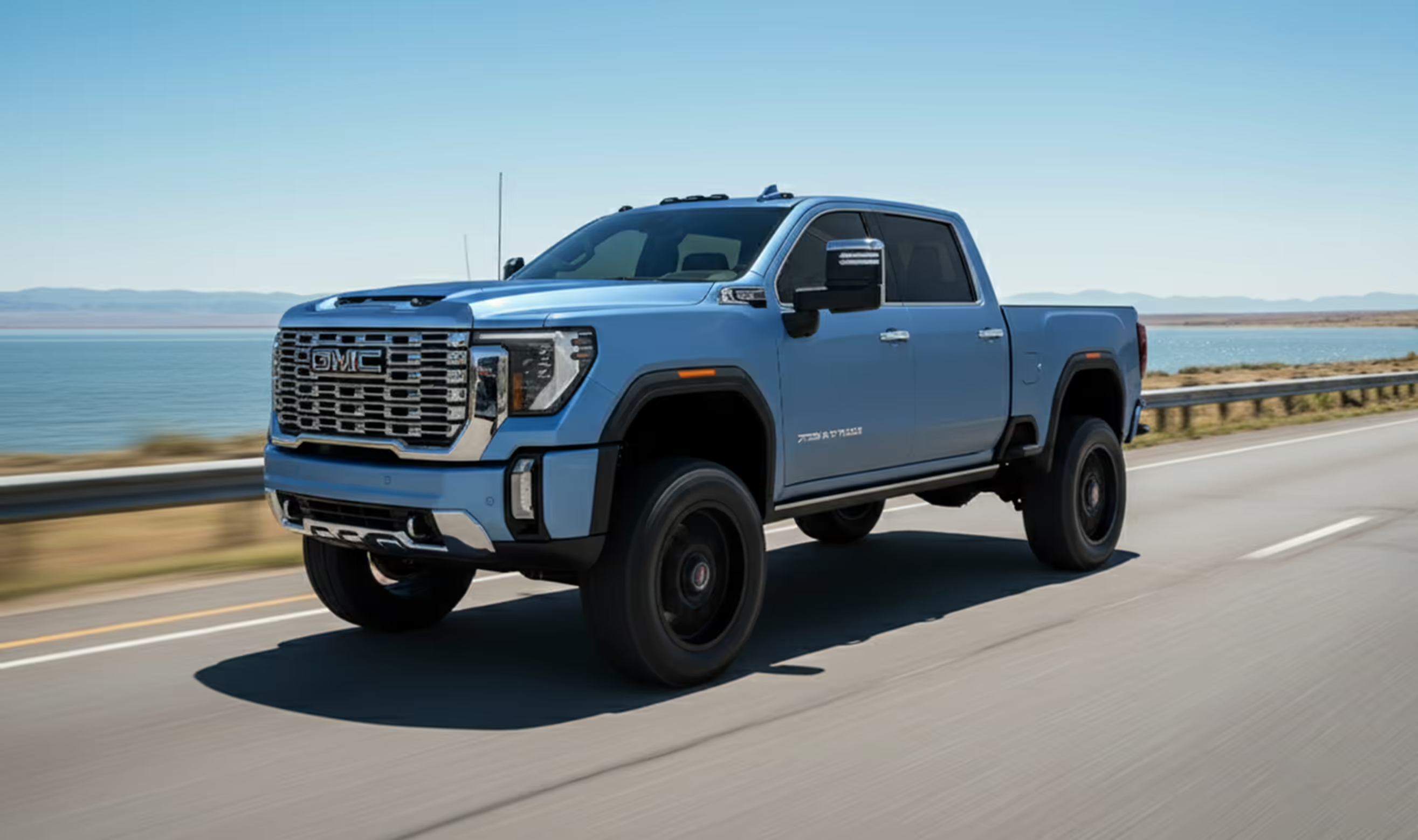
Window Tint Percentages Explained

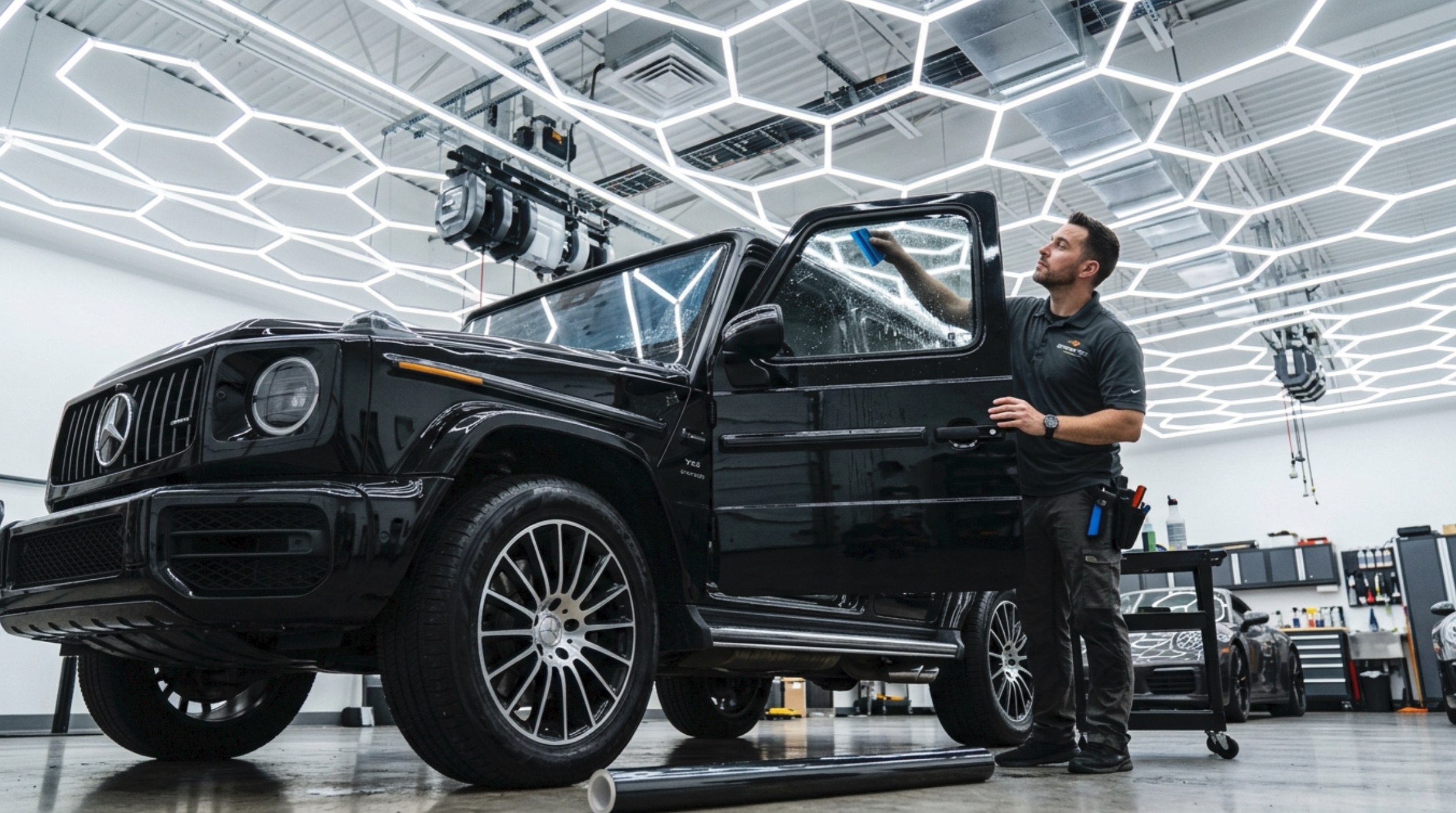
Window Tint Percentages Explained
Choosing a window tint percentage can feel confusing.
You may see options such as 5%, 15%, 20%, 35%, 50%, or 70%, but the numbers do not immediately tell you how the finished tint will look on your vehicle. It can also be easy to assume that a lower number means better heat protection, even though darkness and performance are not the same thing.
Understanding window tint percentages helps you make a better decision about privacy, visibility, appearance, glare reduction, and comfort.
C4 Wraps provides professional car window tinting in McKinney, TX, for cars, trucks, SUVs, vans, and commercial vehicles. Our team can help you compare tint shades and choose a window tint percentage that fits your vehicle and driving needs.
Call C4 Wraps at 469-458-2700 to request a quote or discuss the right tint shade for your vehicle.
What Does Window Tint Percentage Mean?
Window tint percentage usually refers to visible light transmission, commonly shortened to VLT.
VLT measures how much visible light passes through the window and tint film.
For example:
- 70% window tint allows approximately 70% of visible light > through.
- 35% window tint allows approximately 35% of visible light > through.
- 20% window tint allows approximately 20% of visible light > through.
- 5% window tint allows approximately 5% of visible light through.
A higher percentage creates a lighter appearance.
A lower percentage creates a darker appearance.
This is why 5% window tint is much darker than 70% window tint.
Lower Number Means Darker Tint
The simplest way to understand tint percentages is:
- Higher percentage = lighter tint
- Lower percentage = darker tint
A 70% film may look nearly clear on some vehicles.
A 50% film creates a subtle change.
A 35% film is noticeably tinted.
A 20% film creates a darker appearance and greater privacy.
A 5% film is extremely dark.
The final appearance can still vary because of:
- Factory-tinted glass
- Interior color
- Exterior lighting
- Window size
- Vehicle design
- Film color
- Time of day
- Whether you are viewing the glass from inside or outside
A tint percentage should therefore be treated as a measurement, not a guarantee that every vehicle will look identical.
Film Percentage Versus Final Window Percentage
One of the most important things to understand is that your vehicle's glass may already block some visible light before any film is installed.
If tint film is installed over factory glass, the final VLT can be darker than the number printed on the film.
For example, installing a 20% film does not always mean the finished window will measure exactly 20% VLT.
The existing glass and film work together.
A professional installer may use a tint meter to evaluate the amount of light passing through the completed window.
This is especially important when trying to match factory rear glass or choose tint for front windows.
Common Window Tint Percentages
Each tint percentage creates a different balance of appearance, privacy, and visibility.
70% Window Tint
A 70 window tint is one of the lightest commonly discussed options.
It allows most visible light to pass through and may appear nearly clear, especially in bright conditions.
A 70% window tint may be chosen for:
- UV protection
- Heat reduction with ceramic film
- A subtle appearance
- Maintaining strong visibility
- Windshield applications where appropriate
- Drivers who do not want dark-looking windows
70 VLT Window Tint
The term 70 VLT window tint means the film allows approximately 70% of visible light through.
It does not mean the film blocks only 30% of heat. Heat rejection and visible-light transmission are separate measurements.
A high-quality 70 ceramic window tint may provide meaningful heat and UV protection while remaining visually light.
70 Ceramic Window Tint
A 70 ceramic window tint can be a good option for drivers who want heat control without dramatically changing the appearance of the glass.
It may be useful for:
- Windshields, where appropriate
- Drivers concerned about nighttime visibility
- Luxury vehicles
- Vehicles with lighter interiors
- Customers who prefer a factory-like look
50% Window Tint
A 50% window tint is still relatively light, but it creates a more noticeable appearance than 70%.
It may offer a balance of:
- Good visibility
- Mild privacy
- Reduced glare
- UV protection
- Heat rejection with quality film
- A subtle change in appearance
A 50% tint may work well for drivers who want the benefits of window film without a heavily tinted look.
35% Window Tint
A 35 window tint is a popular middle-range shade.
It allows approximately 35% of visible light through and creates a clearly tinted appearance without being as dark as 20% or 5%.
A 35 percent window tint may provide:
- Moderate privacy
- Good daytime glare reduction
- A noticeable appearance
- Better visibility than darker shades
- A balanced look for many vehicles
For some drivers, 35% window tint offers a practical compromise between privacy and nighttime visibility.
30% Window Tint
A 30 window tint creates a darker appearance than 35%, although the difference may appear subtle depending on the vehicle.
A 30 percent window tint may appeal to drivers who want:
- More privacy than 35%
- A clean, darker look
- Reduced glare
- Reasonable visibility
- A shade between medium and dark tint
The final appearance will depend on the vehicle's existing glass.
25% Window Tint
A 25 window tint provides a darker look and greater privacy than 30% or 35%.
A 25 percent window tint may be considered by drivers who want:
- A stronger tinted appearance
- Increased privacy
- More glare reduction
- A shade close to some factory-tinted rear glass
A 25% window tint may appear darker from the outside when paired with a black or dark interior.
20% Window Tint
A 20 window tint is a popular darker option.
It allows approximately 20% of visible light through and creates a much more private appearance than lighter shades.
A 20 percent window tint may provide:
- Strong privacy
- A dark, finished appearance
- Reduced glare
- A close match to some factory rear privacy glass
- A more aggressive vehicle style
Nighttime visibility should be considered carefully, particularly on front side windows.
20 Ceramic Window Tint
A 20 ceramic window tint combines a darker shade with ceramic-film performance.
Potential benefits may include:
- Heat rejection
- UV protection
- Glare reduction
- Strong privacy
- A premium appearance
Remember that ceramic technology does not make dark film easier to see through at night. The VLT still affects how much visible light passes through the glass.
15% Window Tint
A 15 window tint creates a very dark appearance.
A 15 percent window tint may offer:
- Strong privacy
- Significant glare reduction
- A darker custom look
- Less visible light entering the cabin
It can be more difficult to see through at night than 20%, 30%, or 35% tint.
Drivers considering 15% window tint should think carefully about visibility, where the film will be installed, and applicable requirements.
10% Window Tint
A 10 window tint is extremely dark.
It allows only a small amount of visible light through and provides substantial privacy during daylight.
Potential concerns include:
- Reduced nighttime visibility
- Difficulty seeing in poorly lit areas
- Challenges during rain or bad weather
- Limited visibility when backing up
- Restrictions on where it can be installed
A 10% tint is generally chosen for a very dark custom appearance rather than maximum everyday visibility.
5% Window Tint
A 5% window tint allows approximately 5% of visible light through.
It is commonly known as limousine tint.
A 5 percent window tint creates one of the darkest appearances commonly available for automotive use.
It can provide:
- Very high privacy
- Strong glare reduction
- A dramatic dark appearance
It can also significantly reduce visibility from inside the vehicle, especially at night.
5% Ceramic Tint
A 5% ceramic tint combines a very dark shade with ceramic film construction.
Ceramic film may provide heat and UV performance, but the 5% VLT still means very little visible light passes through the glass.
Ceramic construction does not eliminate the visibility limitations of an extremely dark shade.
1% Tint
A 1% tint is exceptionally dark and allows almost no visible light through.
It is darker than standard limousine tint and is not a practical choice for most everyday vehicle windows.
Potential problems include:
- Extremely limited visibility
- Difficulty driving at night
- Difficulty seeing pedestrians or obstacles
- Problems backing up
- Significant restrictions on use
Drivers searching for the darkest window tint may encounter 1% products, but the darkest available option is not automatically the safest or most useful.
What Is the Darkest Window Tint?
Among commonly available automotive tint shades, 5% is often considered the darkest practical commercial option.
Products darker than 5%, including 1% tint, may exist but can make it extremely difficult to see through the glass.
The darkest window tint may provide more privacy, but it also creates greater visibility concerns.
Before choosing very dark tint, consider:
- Nighttime driving
- Parking garages
- Unlit roads
- Rain
- Pedestrians
- Backing up
- Side-mirror visibility
- Which window is being tinted
A professional installer can help you compare a darker appearance with real-world visibility.
Tint Darkness Does Not Equal Heat Rejection
One of the biggest misconceptions about car window tint is that the darkest film blocks the most heat.
That is not always true.
A dark, low-quality film may reduce visible light but provide limited infrared heat rejection.
A lighter ceramic film may reject more heat while allowing more visible light through.
When comparing tint, ask about:
- Visible-light transmission
- Infrared rejection
- Total solar energy rejection
- UV rejection
- Glare reduction
- Film construction
- Warranty
The best tint should be chosen based on performance and visibility, not darkness alone.
Ceramic Tint Shades
Ceramic tint is available in multiple shades.
Common ceramic tint shades may include:
- 70%
- 50%
- 35%
- 30%
- 25%
- 20%
- 15%
- 5%
The exact shade selection depends on the film line and manufacturer.
Ceramic tint can provide heat and UV performance at both light and dark percentages.
For example:
- A 70% ceramic film may be selected for a nearly clear appearance.
- A 35% ceramic film may create a balanced, medium tint.
- A 20% ceramic film may provide a darker look and greater privacy.
- A 5% ceramic film may create maximum darkness but limited > visibility.
The best ceramic tint shade depends on your goals.
Choosing Tint for Front Windows
Front window tint requires careful consideration because the driver must be able to see mirrors, pedestrians, vehicles, and road conditions.
When choosing front window tint, think about:
- Nighttime visibility
- Side-mirror visibility
- Local lighting
- Rain and bad weather
- Your eyesight
- The darkness of the interior
- Existing factory glass
- Applicable requirements
Some drivers choose a medium shade for front windows and a darker shade for rear windows.
Others attempt to match the rear factory glass.
A professional installer can help compare the shades visually before installation.
Choosing Front Windshield Tint
Front windshield tint affects the driver's primary view of the road.
Windshield film should be selected with visibility as the highest priority.
Some drivers choose:
- A light, nearly clear heat-rejection film
- A UV-blocking ceramic film
- A visor strip near the top of the windshield
A dark front windshield tint can make night driving and poor-weather visibility significantly more difficult.
Any windshield tint should be selected carefully and used only where appropriate.
Windshield Tint and Heat Reduction
Because the windshield is one of the largest pieces of glass on many vehicles, it can allow substantial sunlight into the cabin.
A light ceramic windshield tint may help reduce:
- Solar heat
- UV exposure
- Glare
- Interior fading
A lighter percentage, such as 70%, may be considered by drivers who want heat rejection while maintaining a clear appearance.
The exact film and application should be discussed with a professional installer.
Matching Front Tint to Factory Rear Glass
Many trucks, SUVs, and crossovers have darker factory rear glass.
Drivers often tint the front side windows to create a more consistent appearance.
However, factory privacy glass is not always the same as aftermarket film.
Factory glass may:
- Be darkened within the glass itself
- Provide privacy
- Offer limited heat rejection
- Measure differently from what it appears visually
An installer can evaluate the rear glass and recommend a front tint that creates a close visual match.
Adding high-quality film to rear factory glass may also improve heat and UV performance.
Which Tint Percentage Is Best for Night Driving?
Lighter tint generally provides better nighttime visibility.
Drivers who regularly travel on:
- Rural roads
- Poorly lit streets
- Construction areas
- Dark parking lots
- Rainy roads
may prefer a lighter tint shade.
A 35%, 50%, or 70% film generally allows more visible light through than 20%, 15%, or 5% film.
The best percentage still depends on the vehicle, glass, and driver.
Which Tint Percentage Provides the Most Privacy?
Lower percentages generally provide greater privacy.
From lighter to darker:
- 70% offers minimal privacy.
- 50% offers mild privacy.
- 35% offer moderate privacy.
- 20% offers strong privacy.
- 15% offers very strong privacy.
- 5% offers extremely high privacy.
Privacy also changes with lighting.
During the day, it may be difficult to see into a darkly tinted vehicle. At night, interior lights can make occupants and belongings more visible.
Window tint should not be treated as a complete security solution.
Which Window Tint Percentage Looks Best?
Appearance is subjective.
A lighter tint may look refined and subtle.
A medium tint may create a balanced factory-style appearance.
A darker tint may look more aggressive and provide greater privacy.
The best-looking tint depends on:
- Vehicle color
- Interior color
- Wheel color
- Trim
- Body style
- Factory glass
- Personal preference
C4 Wraps can help you compare shades before choosing your film.
How Window Tint Is Professionally Installed
Professional window tint installation generally includes:
- Inspecting the vehicle and glass
- Discussing your tint goals
- Comparing film and shade options
- Cleaning and preparing the windows
- Removing old tint when necessary
- Shaping the film for each window
- Applying the film to the interior glass
- Finishing the edges
- Inspecting the completed work
- Explaining curing and aftercare
Professional installation helps reduce bubbles, contamination, uneven edges, and other problems associated with poor preparation.
Why Choose C4 Wraps for Window Tinting?
C4 Wraps provides professional window tinting from its McKinney, TX, shop.
The team focuses on:
- High-quality workmanship
- Professional installation
- Clear communication
- Premium materials
- Honest recommendations
- Transparent service
- Customer satisfaction
C4 Wraps also provides:
- Commercial vehicle wraps
- Color-change wraps
- Paint protection film
- Boat wraps
- Architectural wraps and graphics
The shop is located at:
C4 Wraps
8176 FM 2478, Building 8650, Suite F
McKinney, TX 75071
Call 469-458-2700 to request a quote or compare window tint percentages.
Schedule Window Tinting in McKinney
Choosing the right tint percentage should not be a guessing game.
C4 Wraps can help you understand:
- How VLT works
- How different percentages look
- How factory glass affects the final result
- The difference between darkness and heat rejection
- Which ceramic tint shades are available
- Which shade fits your visibility and privacy goals
Call 469-458-2700 to discuss your vehicle and schedule professional window tint installation.
Conclusion
Window tint percentages describe how much visible light passes through the glass and film.
A higher number creates a lighter tint, while a lower number creates a darker tint.
A 70% window tint is light and subtle. A 35% tint creates a balanced medium appearance. A 20% tint provides stronger privacy. A 5% tint is extremely dark and may significantly affect nighttime visibility.
The darkest tint is not automatically the best tint.
Heat rejection, UV protection, clarity, privacy, and visibility should all be considered before choosing a shade. A high-quality ceramic film can provide strong heat protection even at a lighter percentage.
C4 Wraps provides professional car window tinting in McKinney, TX, and can help you compare tint shades for your car, truck, SUV, van, or commercial vehicle.
Call C4 Wraps at 469-458-2700 to request a quote and choose the right window tint percentage for your vehicle.
Frequently Asked Questions About Window Tint Percentages
What does window tint percentage mean?
Window tint percentage usually refers to visible-light transmission, or VLT. It measures how much visible light passes through the glass and film.
Is a lower tint percentage darker?
Yes. A lower percentage allows less visible light through and creates a darker appearance.
Is 70% window tint dark?
No. A 70% window tint is relatively light and may look nearly clear on some vehicles.
What is 70 VLT window tint?
A 70 VLT film allows approximately 70% of visible light to pass through.
Is 70% ceramic tint good for heat?
A high-quality 70% ceramic tint may provide meaningful heat and UV protection while maintaining a light appearance.
Is 50% window tint noticeable?
Yes, but it is subtle compared with darker shades such as 20% or 5%.
Is 35% window tint dark?
A 35% tint creates a noticeable medium shade but is lighter than 20%, 15%, or 5% film.
Is 30% window tint darker than 35%?
Yes. A 30% film allows slightly less visible light through than a 35% film.
What does 25% window tint look like?
A 25% tint creates a darker appearance with increased privacy, especially when paired with a dark interior.
Is 20% window tint dark?
Yes. A 20% tint creates a clearly dark appearance and provides substantial privacy.
What is 20% ceramic window tint?
It is ceramic film that allows approximately 20% of visible light through while also offering the heat and UV performance of that particular ceramic product.
Is 15% window tint difficult to see through at night?
It can be. A 15% tint allows limited visible light through and may reduce nighttime visibility.
Is 10% window tint too dark?
It may be too dark for many everyday driving situations, especially at night or in poor weather.
What is 5% window tint?
A 5% tint allows approximately 5% of visible light through and is often called limousine tint.
Is 5% ceramic tint easier to see through?
Ceramic construction may improve clarity and heat performance, but a 5% VLT film is still extremely dark.
What is 1% tint?
A 1% tint allows almost no visible light through and is impractical for most everyday vehicle windows.
What is the darkest window tint?
Five percent is one of the darkest commonly available automotive shades, although darker products may exist.
Does darker window tint block more heat?
Not necessarily. A lighter, high-quality ceramic film may reject more heat than a darker basic film.
What tint percentage is best for privacy?
Lower percentages such as 20%, 15%, or 5% generally provide more privacy, but visibility should also be considered.
What tint percentage is best for night driving?
Lighter shades such as 35%, 50%, or 70% generally provide better nighttime visibility than darker films.
Can I use dark tint on the front windshield?
A dark windshield tint can significantly reduce visibility and may not be appropriate. Windshield tint should be selected carefully.
How do I choose the right tint percentage?
Consider privacy, nighttime visibility, appearance, heat rejection, factory glass, and the windows being tinted.
Where can I compare tint percentages in McKinney?
C4 Wraps provides professional window tinting at 8176 FM 2478, Building 8650, Suite F, McKinney, TX 75071.
How do I schedule window tinting with C4 Wraps?
Call 469-458-2700 to compare film options, request a quote, and schedule an appointment.
Explore Similar featured articles
Get inspired by our most impactful stories and ideas — handpicked to showcase the latest in design, technology, and strategy for wraps that turn heads.

Stand Out in Wraps — And Stay Remembered.
Step into the world of unforgettable vehicle wraps. With C4 Wraps, your perfect vision becomes reality — whether it’s your fleet, your car, or your space. Get noticed everywhere, wrap now and pay later, and enjoy a custom design experience built entirely around your vision.