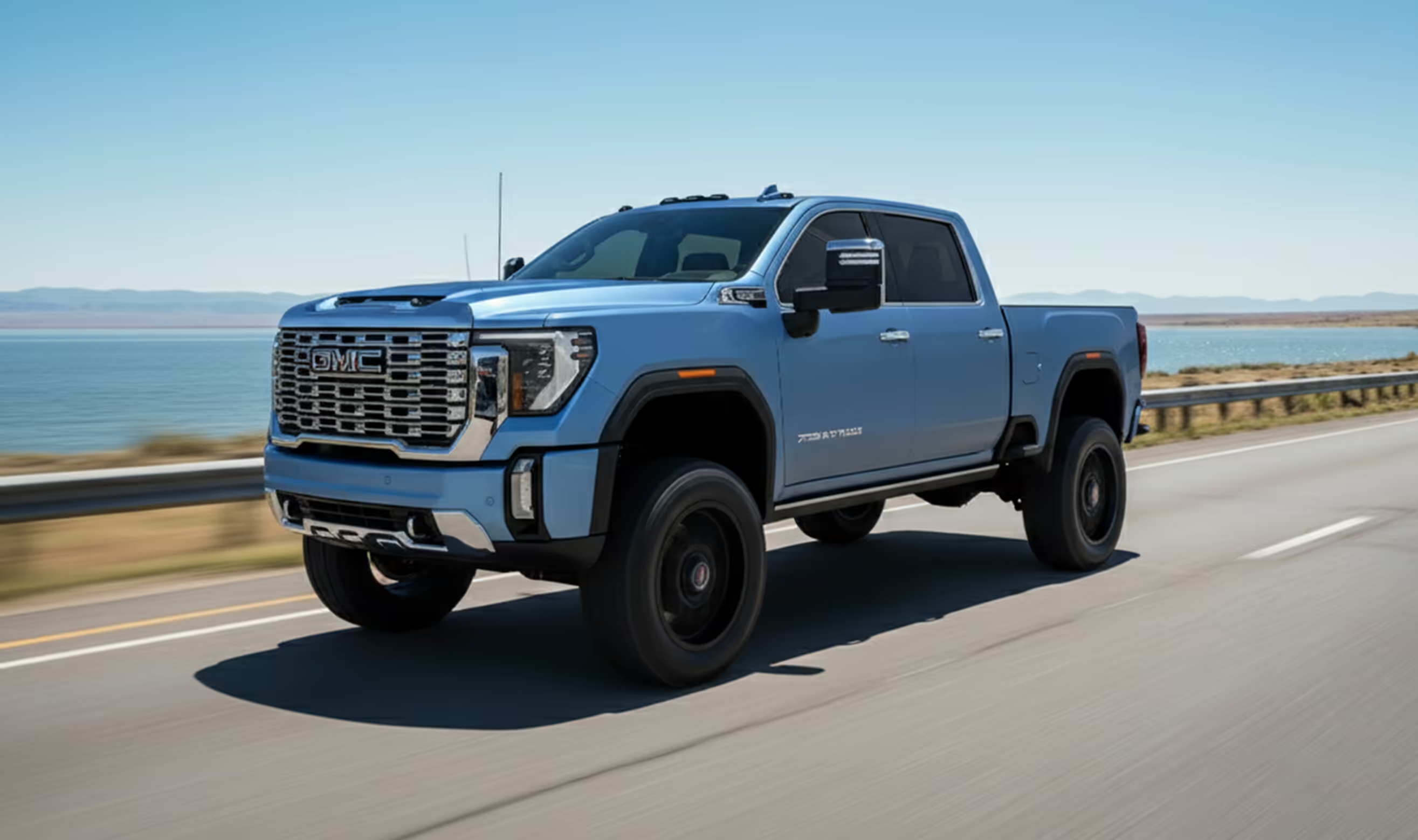
Window Tint Film for Cars: What to Know Before Booking

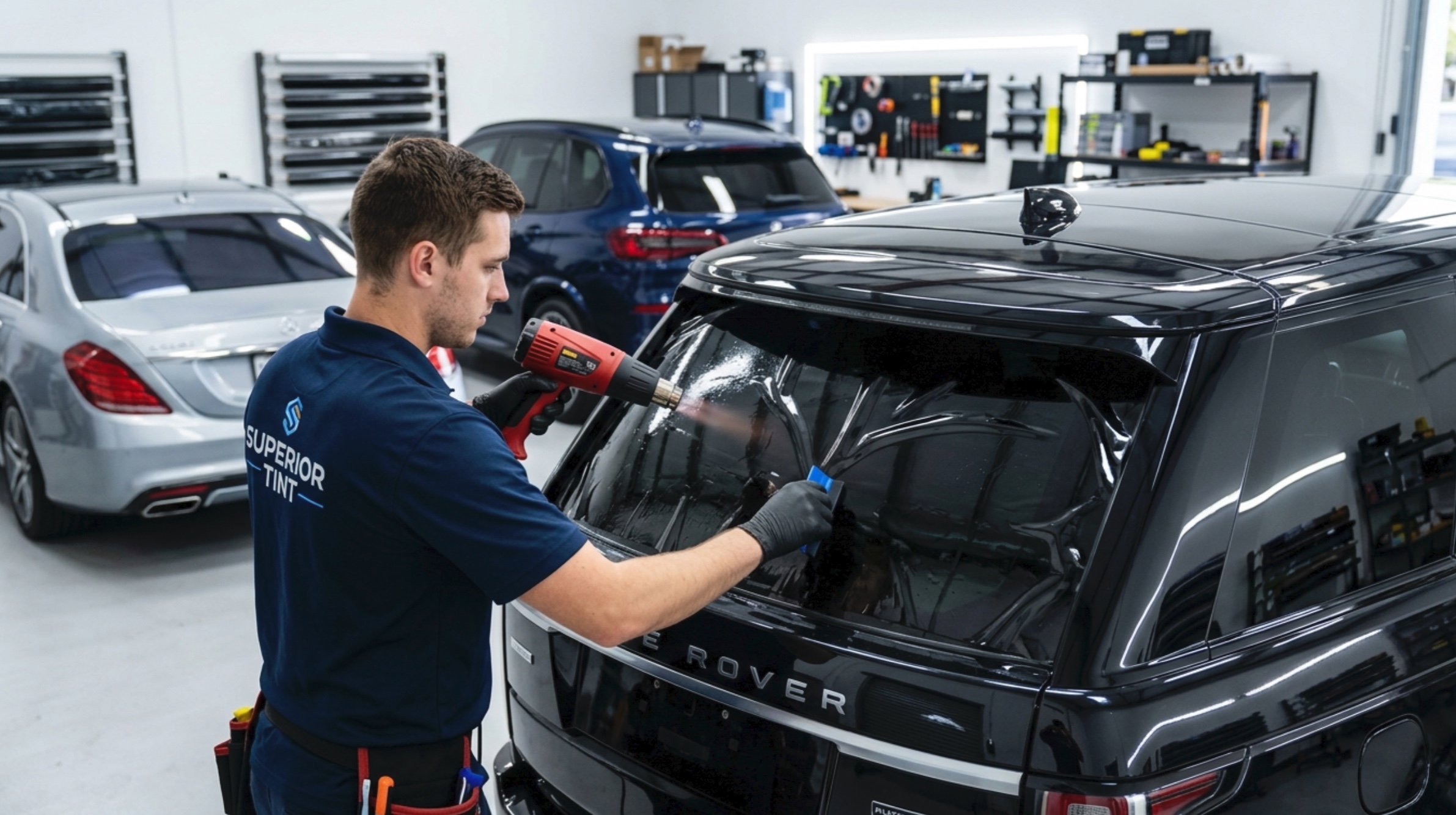
Window Tint Film for Cars: What to Know Before Booking
Choosing window tint film for your car can feel more complicated than expected.
You may come across ceramic window tint film, carbon window tint, removable film, precut tint kits, reflective film, static-cling products, and inexpensive tint rolls. Each option may look similar in a product photo, but they can differ significantly in heat rejection, UV protection, clarity, durability, appearance, and installation difficulty.
The right automotive window film should fit your vehicle, driving habits, comfort goals, and budget.
C4 Wraps provides professional window tinting in McKinney, TX, for cars, trucks, SUVs, vans, and commercial vehicles. Our team can help you understand the available films and select an option that improves comfort, privacy, UV protection, glare reduction, and appearance.
Call C4 Wraps at 469-458-2700 to request a quote or schedule professional window tint installation.
What Is Window Tint Film?
Window tint film is a thin material applied to the interior surface of automotive glass.
Depending on the product, tint film can help:
- Reduce heat entering the vehicle
- Block harmful UV rays
- Reduce glare
- Improve privacy
- Protect the interior
- Change the appearance of the glass
- Make daily driving more comfortable
Automotive window film is available in different shades, materials, and performance levels.
The darkness of the film is only one part of the decision. A lighter, high-quality ceramic film may provide stronger heat rejection than a darker, lower-quality film.
Window Tint Film Versus Factory-Tinted Glass
Factory-tinted glass and aftermarket window tint film are not always the same.
Factory privacy glass is commonly found on the rear windows of trucks, SUVs, and crossovers. The color is often built into the glass itself rather than applied as a removable film.
Factory glass may provide:
- A darker appearance
- Added privacy
- Some UV protection
However, it may not provide the same heat rejection as a quality aftermarket film.
Professional window tinting film can be installed over compatible factory glass to improve heat and UV performance while maintaining the darker appearance.
Common Types of Window Tinting Film for Cars
There are several categories of car window tint film. Understanding the main differences can help you make a better decision before booking.
Dyed Window Tint Film
Dyed tint film is generally one of the most affordable options.
It uses layers of dye to create a darker appearance and reduce the amount of visible light entering the cabin.
Potential benefits include:
- Lower initial price
- Increased privacy
- Reduced glare
- A darker appearance
Possible limitations include:
- Lower heat rejection than premium films
- Greater chance of fading over time
- Possible discoloration with lower-quality products
- Less optical clarity than better films
Dyed film may be appropriate for drivers who mainly want privacy and appearance.
Carbon Window Tint
Carbon window tint contains carbon particles designed to improve color stability and heat performance.
It typically provides:
- A dark, matte appearance
- Better heat rejection than many basic dyed films
- UV protection
- Reduced glare
- Greater color stability
- Nonreflective styling
Carbon film is often a middle option between basic film and premium ceramic tint.
It may work well for drivers who want good privacy, a clean appearance, and moderate heat reduction without paying for the highest-performing ceramic product.
Ceramic Window Tint Film
Ceramic window tint film uses ceramic particles designed to reject heat and UV radiation while maintaining clarity.
Potential benefits include:
- Strong heat rejection
- High UV protection
- Reduced glare
- Good optical clarity
- Stable color
- Nonmetallic construction
- Multiple shade options
- Premium long-term performance
Ceramic tint film is often a strong choice for Texas drivers because of the intense sunlight and high temperatures.
It usually costs more than basic or carbon film, but many drivers value the added comfort.
Nano Ceramic Window Film
Nano ceramic film uses extremely small ceramic particles distributed through the film.
These particles are designed to manage solar and infrared heat while preserving visibility.
Nano ceramic window tint may offer:
- Strong heat rejection
- UV protection
- Reduced glare
- Good clarity
- Nonmetallic construction
- Performance in lighter shades
The term "nano" does not guarantee that every product performs equally. Compare the exact film specifications and warranty.
Reflective Window Tint
Reflective window tint creates a mirrored or metallic-looking exterior appearance.
It may provide:
- Heat rejection
- Increased daytime privacy
- Glare reduction
- A distinctive appearance
Possible concerns include:
- A highly reflective look
- Reduced nighttime privacy when interior lights are on
- Potential restrictions for automotive use
- A style that does not fit every vehicle
Reflective film is common in architectural applications, but some products may be marketed for vehicles. Confirm that the film is specifically designed for automotive glass.
Polarized Window Tint
The term "polarized window tint" is often used by customers looking for glare reduction.
Polarization is commonly associated with sunglasses and optical filters. Automotive window films are more often evaluated by:
- Visible-light transmission
- Heat rejection
- Infrared rejection
- UV rejection
- Glare reduction
- Optical clarity
A product marketed as polarized should still be evaluated based on its verified automotive specifications.
UV Window Tint
UV window tint is designed to reduce ultraviolet radiation entering through the glass.
Many high-quality automotive films can block up to 99% of harmful UV rays, depending on the product.
UV protection can help protect:
- Drivers
- Passengers
- Children
- Leather seating
- Cloth upholstery
- Dashboards
- Door panels
- Interior trim
A film does not need to look extremely dark to provide strong UV protection.
Blackout Window Tint
Blackout window tint is designed to block nearly all visibility through the glass.
It may be appropriate for:
- Certain commercial applications
- Display vehicles
- Privacy panels
- Non-driving windows
- Specialized vehicle uses
Blackout window tint is generally not appropriate for windows required for safe driving visibility.
Drivers should be cautious when considering blackout film for front side windows or windshields.
Removable Window Tint
Removable window tint is designed to be taken off more easily than traditional adhesive film.
It may appeal to drivers who want:
- Temporary privacy
- Seasonal tint
- A nonpermanent option
- Film that can be changed more easily
Possible limitations include:
- Less durability
- More visible edges
- Reduced heat performance
- A less professional appearance
- Greater chance of movement or lifting
Removable window tint for cars can be useful for temporary needs, but it may not provide the same performance or appearance as professionally installed automotive film.
Static-Cling Window Tint
Static-cling window tint attaches to the glass without traditional adhesive.
It is usually designed for temporary or reusable use.
Potential benefits include:
- Easy installation
- Easy removal
- Reusability
- Lower cost
Potential drawbacks include:
- Visible edges
- Bubbles or wrinkles
- Movement on the glass
- Lower durability
- Reduced clarity
- Limited heat rejection
Static-cling film may work for temporary privacy but is rarely the best option for a permanent, high-quality automotive result.
Precut Window Tint
Precut window tint is cut in advance to match the shape of a specific vehicle's windows.
A precut window tint kit may include film for:
- Front side windows
- Rear side windows
- Rear windshield
- Small quarter windows
- Windshield visor strip
Precut film removes some of the cutting work, but it does not eliminate the difficulty of installation.
The installer still must:
- Clean the glass
- Remove contamination
- Position the film
- Work around seals
- Shape curved film
- Remove moisture
- Avoid wrinkles
- Finish the edges
A precut film can still be installed poorly.
Precut Window Tint Kits
Precut window tint kits are commonly sold online for do-it-yourself use.
They may appear attractive because:
- The pieces are already shaped
- The price is lower than professional installation
- Multiple windows may be included
- The kit is vehicle-specific
However, the fit may vary, and automotive windows can be difficult to tint without experience.
Common problems include:
- Misaligned film
- Gaps
- Creases
- Bubbles
- Dust beneath the film
- Peeling edges
- Poor rear-window installation
A precut kit saves cutting time but does not replace installation skill.
Window Tint Kits
A window tint kit or window tinting kit may include:
- Tint film
- Squeegee
- Spray bottle
- Cutting knife
- Cleaning tools
- Heat-shrinking instructions
- Application solution
Some kits contain everything needed for a basic attempt, but they do not provide a controlled work environment or professional experience.
Automotive tint is sensitive to dust, hair, wind, moisture, and glass preparation.
Window Tint Rolls
Window tint rolls are bulk film sold in various widths and lengths.
A tint roll may be used by:
- Professional installers
- Automotive shops
- Experienced hobbyists
- DIY customers
Window tint rolls require cutting and shaping for each piece of glass.
A professional installer may use a tint roll because it allows the film to be customized precisely for the vehicle.
A consumer buying a bulk roll must handle:
- Measuring
- Cutting
- Heat shaping
- Contamination control
- Film positioning
- Edge finishing
Ceramic Tint Rolls
A ceramic tint roll is bulk ceramic film.
The film itself may be high quality, but the final result still depends on the installation.
Buying a ceramic tint roll does not guarantee:
- Clean edges
- Bubble-free installation
- Proper heat shaping
- Correct alignment
- Minimal contamination
- A professional appearance
High-quality film can still be wasted or damaged during a poor installation.
Window Tint for Sale Online
You can find window tint for sale through many retailers and online marketplaces.
Before buying, review:
- Whether the film is designed for automotive use
- Film type
- Tint percentage
- UV protection
- Heat-rejection claims
- Product authenticity
- Warranty
- Roll size
- Vehicle compatibility
- Installation requirements
Be cautious with products that make broad performance claims without clear specifications.
Tint Percentage and Film Selection
Tint percentage usually refers to visible-light transmission, or VLT.
A higher percentage creates a lighter appearance.
A lower percentage creates a darker appearance.
Examples include:
- 70% tint: light
- 50% tint: subtle
- 35% tint: medium
- 20% tint: dark
- 5% tint: extremely dark
Film darkness does not directly measure heat rejection.
A light ceramic film may reject more heat than a dark basic film.
Heat Rejection Versus Tint Darkness
Drivers often assume that dark film blocks the most heat.
This is not always true.
Heat rejection depends on the film's construction and ability to manage solar and infrared energy.
When comparing film, ask about:
- Total solar energy rejection
- Infrared rejection
- UV rejection
- Visible-light transmission
- Optical clarity
- Glare reduction
These measurements provide more useful information than tint darkness alone.
What Is the Best Window Tint Film for Cars?
The best window tint film depends on your goals.
Choose basic film if:
- Cost is the main priority.
- You mainly want privacy.
- You want a darker appearance.
- Maximum heat rejection is not necessary.
Choose carbon film if:
- You want better heat performance than basic film.
- You prefer a dark, matte look.
- You want good value.
- You want a stable color.
Choose ceramic film if:
- Heat rejection is a top priority.
- You drive frequently.
- You park outside.
- You want strong UV protection.
- You care about clarity.
- You want premium performance.
What to Ask Before Booking Window Tinting
Before scheduling, ask the tint shop:
- What type of film do you use?
- Is the film ceramic, carbon, or dyed?
- What tint percentages are available?
- How much heat does the film reject?
- How much UV radiation does it block?
- Which windows are included?
- Is old tint removal included?
- Is the windshield included?
- Is the sunroof included?
- What warranty is available?
- How long will installation take?
- How long will the film take to cure?
A professional shop should explain the options clearly.
Professional Installation Versus DIY Film
Professional window tint installation provides several advantages.
Controlled Environment
Dust, wind, pollen, and debris can become trapped beneath the film. A professional shop offers a more controlled workspace.
Proper Tools
Installers use tools for:
- Cleaning
- Cutting
- Shaping
- Positioning
- Squeegeeing
- Edge finishing
Experience With Curved Glass
Rear windows and windshields may require heat shaping.
Better Contamination Control
Even a small hair or piece of dust can remain visible beneath the film.
Cleaner Edges
Professional installers understand how to work around window seals and create consistent edges.
Less Risk of Damage
Improper cutting or scraping can damage glass, trim, and rear defroster lines.
What Happens During Professional Window Tint Installation?
A professional installation generally includes:
- Inspecting the vehicle and glass
- Discussing your goals
- Selecting the film
- Cleaning the glass
- Removing old tint if necessary
- Cutting or preparing the film
- Shaping curved pieces
- Applying the film
- Finishing the edges
- Inspecting the completed installation
- Explaining curing and care
How Long Does Window Tint Film Last?
The life of automotive window film depends on:
- Film quality
- Installation quality
- Sun exposure
- Heat exposure
- Cleaning methods
- Vehicle use
- Window movement
- Physical damage
High-quality film installed professionally generally has a better chance of maintaining its appearance and performance over time.
Lower-quality film may fade, bubble, peel, or discolor sooner.
How to Care for Window Tint Film
After installation:
- Do not roll down the windows until instructed.
- Allow temporary moisture to dry.
- Do not press on bubbles or haze during curing.
- Use a soft microfiber cloth.
- Use ammonia-free tint-safe cleaner.
- Avoid abrasive brushes.
- Keep sharp objects away from the film.
- Avoid scraping the interior glass.
Follow the installer's specific care instructions.
Signs of Poor-Quality Film or Installation
Watch for:
- Bubbling
- Purple discoloration
- Peeling
- Wrinkles
- Cloudiness
- Uneven edges
- Gaps
- Heavy contamination
- Poor visibility
- Film separating from the glass
Some haze or small moisture pockets may be normal immediately after installation. Persistent defects should be evaluated.
How Much Does Window Tint Film Cost?
Window tint pricing depends on:
- Vehicle size
- Number of windows
- Film type
- Tint percentage
- Ceramic versus carbon film
- Windshield coverage
- Sunroof coverage
- Existing tint removal
- Installation difficulty
Buying film alone may cost less than professional service, but installation errors can increase the final cost.
Call C4 Wraps at 469-458-2700 for a vehicle-specific quote.
Why Choose C4 Wraps for Car Window Tinting?
C4 Wraps provides professional automotive window tinting from its McKinney, TX, shop.
The team focuses on:
- High-quality workmanship
- Professional installation
- Premium materials
- Clear communication
- Honest recommendations
- Transparent service
- Customer satisfaction
C4 Wraps also provides:
- Commercial vehicle wraps
- Color-change wraps
- Paint protection film
- Boat wraps
- Architectural wraps and graphics
The shop is located at:
C4 Wraps
8176 FM 2478, Building 8650, Suite F
McKinney, TX 75071
Call 469-458-2700 to compare film options or request a quote.
Schedule Professional Window Tinting in McKinney
You do not have to choose a film based on packaging, price, or online claims alone.
C4 Wraps can help you compare:
- Standard window tint film
- Carbon window tint
- Ceramic window tint film
- Nano ceramic tint
- Tint percentages
- Heat-rejection performance
- UV protection
- Full-vehicle tint
- Windshield film
- Old-tint removal
Call 469-458-2700 to discuss your vehicle and schedule professional window tinting.
Conclusion
Window tint film for cars is available in many forms, including dyed, carbon, ceramic, reflective, removable, static-cling, precut, and bulk-roll products.
Each type has advantages and limitations.
Basic film may provide privacy and appearance at a lower price. Carbon tint can offer good value and moderate heat rejection. Ceramic film is often the strongest choice for drivers who prioritize heat control, UV protection, clarity, and premium performance.
Removable and static-cling films may work for temporary needs, while precut kits and tint rolls require more installation skill than many buyers expect.
The best result depends on both the film and the installation.
C4 Wraps provides professional window tinting in McKinney, TX, and can help you select the right automotive window film for your vehicle and goals.
Call C4 Wraps at 469-458-2700 to request a quote and schedule your window tint installation.
Frequently Asked Questions About Window Tint Film
What is window tint film?
Window tint film is thin material applied to automotive glass to improve privacy, reduce glare, block UV rays, control heat, or change appearance.
Is window tint installed inside or outside the glass?
Automotive window film is generally installed on the interior surface of the glass.
What is the difference between window film and factory tint?
Factory privacy glass is usually darkened within the glass. Aftermarket film is applied to the glass and can provide additional heat and UV performance.
What is ceramic window tint film?
Ceramic film contains ceramic particles designed to provide heat rejection, UV protection, glare reduction, and clarity.
What is carbon window tint?
Carbon tint contains carbon particles and typically provides a dark appearance, UV protection, color stability, and moderate heat rejection.
Is ceramic tint better than carbon tint?
Ceramic tint generally offers stronger heat rejection, while carbon film may provide good value at a lower cost.
What is nano ceramic tint?
Nano ceramic tint uses very small ceramic particles designed to help control heat and UV radiation.
What is UV window tint?
UV window tint is film designed to reduce ultraviolet radiation entering through the glass.
What is polarized window tint?
The term is sometimes used for glare-reducing film, but automotive films should be compared by VLT, heat rejection, UV protection, and clarity.
What is reflective window tint?
Reflective tint creates a mirrored appearance and may reduce heat and glare. Confirm that the film is designed for automotive use.
What is blackout window tint?
Blackout film blocks nearly all visibility and is generally not appropriate for windows needed for safe driving.
What is removable window tint?
Removable tint is temporary film designed to come off more easily than traditional adhesive film.
Does removable window tint work well on cars?
It may provide temporary privacy but often offers less durability, clarity, and heat performance than professional automotive film.
What is static-cling window tint?
Static-cling film attaches without standard adhesive and is designed for temporary or reusable use.
What is precut window tint?
Precut film is shaped in advance for a particular vehicle's windows.
Are precut window tint kits easy to install?
They remove some cutting work, but installation still requires cleaning, positioning, shaping, and contamination control.
What comes in a window tint kit?
A kit may include film, a squeegee, application solution, cutting tools, and cleaning supplies.
What is a window tint roll?
A tint roll is bulk film that must be measured, cut, shaped, and installed for each window.
Can I install a ceramic tint roll myself?
It is possible, but curved glass, contamination, heat shaping, and edge finishing make professional installation more reliable.
Does darker tint block more heat?
Not necessarily. A lighter ceramic film may reject more heat than a darker basic film.
How long does window tint film last?
Its lifespan depends on film quality, installation, sun exposure, cleaning, and physical wear.
How should I clean tinted window film?
Use a soft microfiber cloth and an ammonia-free cleaner made for tinted windows.
How much does window tint film cost?
Pricing depends on the vehicle, film type, number of windows, old-tint removal, windshield coverage, and installation difficulty.
Where can I get professional window tinting in McKinney?
C4 Wraps provides professional window tinting at 8176 FM 2478, Building 8650, Suite F, McKinney, TX 75071.
How do I schedule window tinting with C4 Wraps?
Call 469-458-2700 to discuss your vehicle, compare film options, request a quote, and schedule an appointment.
Explore Similar featured articles
Get inspired by our most impactful stories and ideas — handpicked to showcase the latest in design, technology, and strategy for wraps that turn heads.

Stand Out in Wraps — And Stay Remembered.
Step into the world of unforgettable vehicle wraps. With C4 Wraps, your perfect vision becomes reality — whether it’s your fleet, your car, or your space. Get noticed everywhere, wrap now and pay later, and enjoy a custom design experience built entirely around your vision.